
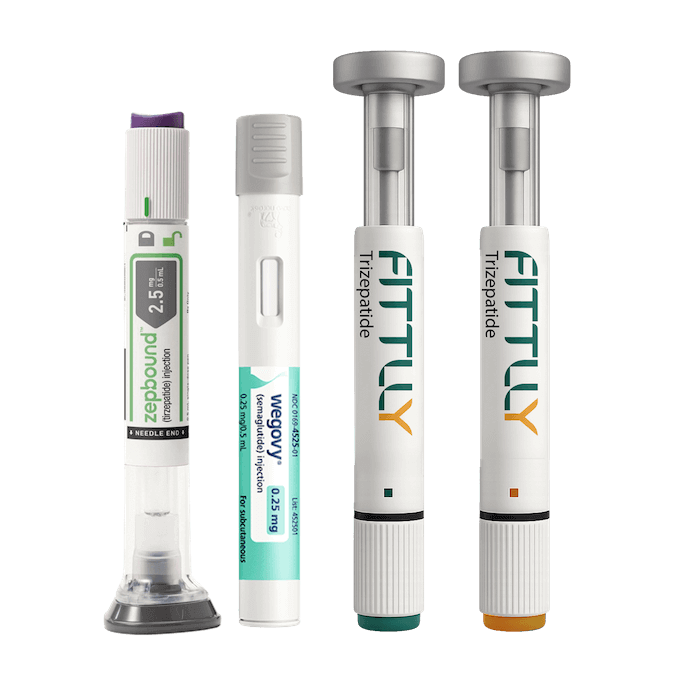
Compounded GLP-1
$350/month*
Our compounded tirzepatide provides a personalized alternative to brand-name GLP-1/GIP injections. Your treatment is built around your health data and goals, with dosing tailored to help you lose weight steadily while supporting digestion, preserving lean mass, and maintaining stable energy. Click here to learn more about our personalized approach to your treatment.
One simple monthly price that includes your medical evaluation, ongoing clinical oversight, and tirzepatide from FDA-inspected compounding pharmacies.
*Pricing may vary for higher-dose protocols. Eligibility is determined by a licensed clinician.
Compounded medications are prescribed only when a licensed clinician decides that a compounded
formulation offers a meaningful clinical benefit compared with an FDA-approved product—for example, a
different dose, route, or specific ingredients selected for an individual patient. These medications are
prepared in state Board of Pharmacy or FDA-licensed compounding facilities using ingredients sourced
from FDA-registered suppliers, and sterile compounds are tested for potency, sterility, and purity.

Clinician-led
Designed around your
biology
Personalized GLP-1 care that adapts as you do. Whether you’re focused on gentle digestion, preserving lean muscle, or sustaining your energy, your treatment plan is reviewed and refined as your body and goals evolve.

Gastro
When starting a GLP-1 therapy, digestive discomfort can be common. Our providers may prescribe supportive nutrients like B3 and B5 which may help your body adjust to your medication.
Muscle
Quick weight loss can also sometimes mean muscle loss. Our providers may prescribe additives like glycine and B12, which may aid in muscle repair as you lose weight.
Energy
As your body adjusts to slower digestion and a reduced calorie diet, you may feel less energetic. Our providers may prescribe additives like methionine, inositol & choline, which may support fat metabolism for consistent energy.
Support at every stage of your GLP-1/GIP treatment
Clear & honest pricing
Straightforward monthly pricing with plans tailored to your clinical needs.
Secure home delivery
Temperature-controlled shipping straight to your door — no pharmacy counters, no extra steps.
Ongoing human support
Reach our care team or connect with other patients for questions, encouragement, and guidance whenever you need it.
Compounded GLP-1/GIP dosing overview for weight management
Your pace, guided by your clinician
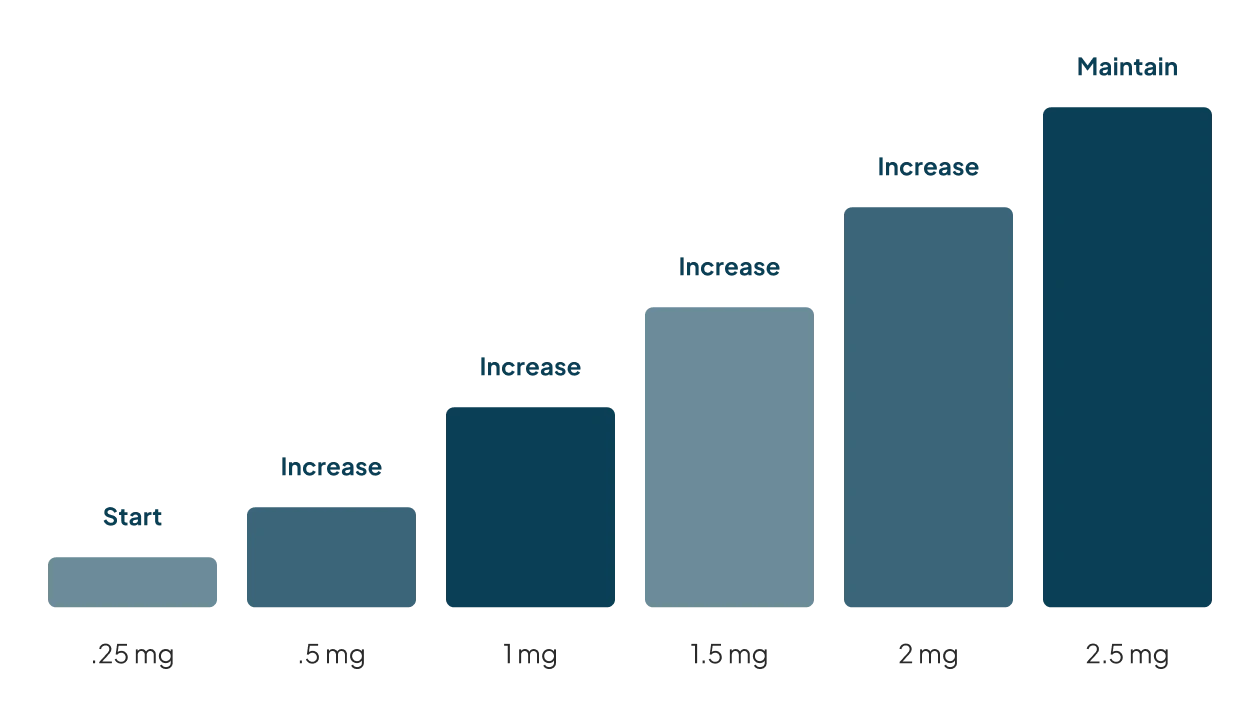
If you’re new to GLP-1/GIP treatment, your clinician will usually start you on a low introductory dose, such as 2.5 mg. Beginning low matters: it gives your body time to adjust to the medication before any increase is considered. Your starting dose and any changes are based on your medical history, your goals, and the conversations you have with your care team.
At your first check-in, we’ll review any side effects you’ve noticed, how your weight is changing, and how you’re feeling overall. If you’re seeing good results and tolerating the medication well, we often recommend staying at that dose until your progress begins to level off. Remember, meaningful changes can take time — for many patients, it may take several weeks to a couple of months before progress is clearly visible.
Frequently asked questions about GLP-1/GIP
Find clear, clinician-backed answers to common questions about compounded GLP-1/GIP with Fittlly.
How do GLP-1/GIP medications work in your body?
GLP-1/GIP medications mimic two natural gut hormones—GLP-1 and GIP—that help regulate blood sugar,
appetite, and digestion. They increase insulin release when blood sugar is high, reduce glucagon (the
hormone that tells your liver to make more sugar), slow how quickly your stomach empties, and reduce
hunger signals.
Together, these effects can help you feel fuller for longer, improve blood sugar control, and support
medically supervised weight loss.
Who is compounded GLP-1/GIP for, and when is it used?
Compounded GLP-1/GIP is typically used as part of a medical weight management plan for adults with
obesity, or for overweight adults who may also have conditions such as high blood pressure, type 2
diabetes, sleep apnea, cardiovascular disease, or high cholesterol. It is always paired with lifestyle
changes like nutrition and movement.
These medicines belong to a class called GIP and GLP-1 receptor agonists. They help by:
• increasing insulin release when blood sugar is elevated
• reducing glucagon, which tells the liver to produce glucose
• slowing how quickly food leaves the stomach
• reducing appetite, which can lower calorie intake
A compounded version is prescribed only when a clinician decides that a customized formulation is more
appropriate than a standard FDA-approved product—for example, due to dose, tolerability, or other
individual needs.
How do I use my GLP-1/GIP injections safely at home?
GLP-1/GIP medication is taken as a subcutaneous (under the skin) injection that you give yourself at
home after proper training from your care team. Common injection sites include:
• the abdomen, at least 2 inches away from the belly button
• the front or outer thigh
• the outer back of the upper arm (this site should be injected by someone else)
Key safety steps:
• Rotate injection sites with each dose. Avoid scars, moles, irritated skin, or bruises, and never
inject through clothing.
• Check the medication before use: the liquid should be clear and colorless. Do not use it if it looks
cloudy, discolored, or contains particles.
• Always use a new, sterile needle for each injection. Never share pens, needles, or syringes with
anyone.
• Take your injection on the same day each week, at any time of day, unless your clinician gives you
specific instructions.
• Follow the step-by-step guide that comes with your medication and any training from your care team. If
you are unsure about your technique or have questions, contact your clinician or pharmacist before
injecting.
How much weight can I lose with GLP-1/GIP treatment?
Results vary a lot from person to person, and no provider can guarantee a specific number of kilos or
pounds you’ll lose. Your starting weight, medical history, dose, consistency with injections, nutrition,
movement, and sleep all play a role.
In clinical trials of a branded tirzepatide (a GLP-1/GIP medicine) at higher doses in adults without
diabetes but with obesity or excess weight plus a weight-related condition, patients lost on average
around 20% of their body weight over more than a year when treatment was combined with diet and
exercise. By comparison, people who only changed diet and exercise in the same study lost only a small
amount of weight.
Your own results may be higher or lower than this. GLP-1/GIP should always be used as part of a broader
medical weight management plan, not as a quick fix, and your clinician will focus on safe, sustainable
progress, not a race to reach a number.
How long does it usually take to see results with GLP-1/GIP treatment?
Weight loss with GLP-1/GIP is not instant, and the timeline is different for everyone. Some patients
notice changes within the first few weeks, while for others it may take a month or longer before the
scale and clothes start to reflect progress.
What matters most is consistency: taking your injections as prescribed, following your nutrition plan,
and staying in touch with your care team. Your clinician will adjust your dose over time based on how
you’re responding, any side effects, and your goals.
As a general guideline, a medically safe rate of weight loss is often around 1–2 pounds per week (about
4–8 pounds per month), but your individual target and pace may differ depending on your starting point
and overall health.
Where is compounded GLP-1/GIP available through Fittlly?
Our compounded GLP-1/GIP injection program is available in much of the United States. Eligibility and prescribing availability can vary by state due to local regulations, and we’ll clearly show you whether we can treat you based on your location during the online eligibility check.
Who can qualify for compounded GLP-1/GIP treatment with Fittlly?
Eligibility is always decided by a licensed clinician after reviewing your medical history, current
health, and goals. Compounded GLP-1/GIP is not suitable for everyone, and it’s only prescribed when it
is clinically appropriate and when a compounded formula makes sense for your specific needs.
In general, patients who may be considered for compounded GLP-1/GIP usually:
• are 18 years of age or older
• have a BMI of 27 or higher
• are not pregnant
• do not have certain medical conditions, such as:
o a history of thyroid cancers or some serious thyroid disorders
o gastroparesis (significantly delayed stomach emptying)
o pancreatic cancer or pancreatitis
o MEN2 (multiple endocrine neoplasia type 2)
o some forms of inflammatory bowel disease
In addition, a compounded medication must provide a meaningful difference compared with an FDA-approved
product for that individual—for example, a different dose, formulation, or ingredient profile that
better fits their needs.
This is not a complete list of eligibility criteria. As part of the Fittlly process, you’ll complete an
online health screening with our telehealth clinicians, who will make the final decision about whether
compounded GLP-1/GIP is appropriate and safe for you.
How will my starting GLP-1/GIP dose be decided?
Your starting dose is always determined by a licensed clinician. When you begin GLP-1/GIP treatment with
Fittlly, you’ll typically start on a low introductory dose. The goal of this first phase is to let your
body adjust gently to the medication and to minimize potential side effects, so the full effect on
weight loss may not be visible until you’ve been on treatment for several weeks. That’s normal and part
of a safe titration process.
After your initial weeks on treatment, your clinician will review your progress, how you’re feeling, and
any side effects before deciding whether to increase, maintain, or adjust your dose.
If you’ve previously used a GLP-1 medication, you may be able to start closer to the dose you were on
before. In that case, we’ll ask you to provide valid documentation of your prior prescription (such as a
prescription label, clinic note, or pharmacy record) during your health screening. If proper
documentation isn’t available, your clinician may recommend starting at a lower introductory dose for
safety and then adjusting from there.
Do I need to follow a specific diet while I’m on GLP-1/GIP?
There isn’t a single “GLP-1/GIP diet” or a list of forbidden foods, but what you eat will strongly
influence how you feel on treatment and how well it works. Your clinician or dietitian may give you
personalized nutrition advice, and it’s important to follow their recommendations.
In general, a balanced way of eating and regular movement will help support weight loss, reduce side
effects, and make your GLP-1/GIP treatment more effective. Many patients feel better when they:
• Limit heavy, greasy, fried, and high-sugar foods that can worsen nausea or digestive discomfort.
• Cut back on alcohol, which can affect blood sugar and digestion.
• Stay well hydrated by drinking enough water throughout the day.
Your Fittlly care team can help you understand what kind of eating pattern fits best with your
lifestyle, your health, and your GLP-1/GIP treatment plan.
What are the possible side effects of GLP-1/GIP?
Common side effects of compounded GLP-1/GIP can include nausea, abdominal discomfort, bloating, burping,
and sometimes dizziness or changes in digestion. Not everyone experiences these, and for many patients
they are mild and tend to improve as the body adjusts to treatment and the dose is increased
gradually.
Serious side effects are less common but can occur. You should contact a clinician urgently if you
experience severe or persistent abdominal pain, vomiting, signs of dehydration, or any new or worrying
symptoms.
If you’re concerned about how you’re feeling on your medication, reach out to the Fittlly care team or
your primary healthcare provider before making changes to your dose or stopping treatment. Your
clinician can review your symptoms, adjust your plan if needed, and help you manage side effects safely.
What should I do if I forget a dose?
If you miss a scheduled GLP-1/GIP injection, take it as soon as you remember unless too much time has
passed. If more than 4 days have gone by since the missed dose, skip it and wait for your next scheduled
injection.
Do not take two doses close together or inject a “double dose” to make up for the one you
missed.
If you’re unsure what to do or you’ve missed more than one dose, contact your Fittlly clinician or your
primary healthcare provider so they can advise you on the safest way to get back on track.
How should I store and dispose of my GLP-1/GIP medication safely?
To keep your GLP-1/GIP treatment safe and effective, it’s important to store and dispose of it
correctly.
Storage guidelines:
• Keep all vials, pens, syringes, and needles out of reach of children and pets.
• Store your medication away from direct light and heat.
• Refrigerate unused GLP-1/GIP between 36°F and 46°F (2°C–8°C), and avoid placing it right next to the
cooling element.
• Do not freeze the medication. If it has been frozen, do not use it—dispose of it properly.
Disposal guidelines:
• Never throw loose needles or syringes directly into the trash. Use an approved sharps container or
follow your local regulations for sharps disposal.
• Do not flush medications down the toilet or pour them down the sink unless specifically instructed to
do so.
• Whenever possible, use a medicine take-back program to dispose of unused or expired medication. Your
pharmacist or local waste authority can tell you what options are available in your area.
If you’re unsure how to store or dispose of your GLP-1/GIP safely, ask your pharmacist or clinician—they
can walk you through the best options for your location.